

Parsley pesto with almonds is one of those recipes that happened because I was trying to be practical, and then it became something I kept making again and again. When I think of pesto, I usually think of the classic basil version: chunky, garlicky, bright green, and spread onto sandwiches or tossed with pasta. But pesto does not have to be made with basil, and it definitely does not have to be made with expensive pine nuts.
The truth is, buying basil in bulk has never been easy around here. If you’re lucky, you can find a whole basil plant, use all the leaves, attempt to grow it in your garden, and then eventually kill it with your lack of a green thumb. Or you find those tiny plastic packets with three sad sprigs of basil that somehow cost way more than they should. Parsley, on the other hand, is easy to find, affordable, and usually sold in generous bunches. So parsley pesto just made sense.
What Is Parsley Pesto?
Parsley pesto is a fresh herb pesto made with parsley instead of basil. It has the same basic idea as traditional pesto: fresh herbs, garlic, nuts, Parmesan cheese, olive oil, and salt blended together into a flavorful sauce.
This version uses almonds instead of pine nuts, which makes it more budget-friendly and much easier to make regularly. Pine nuts are delicious, but they can be expensive. Almonds are easier to find, more affordable, and still give the pesto a rich, nutty flavor.
The flavor is fresh, garlicky, savory, and a little earthy from the parsley. It is thick enough to spread on sandwiches, but you can also loosen it with a little extra olive oil and toss it with pasta or spoon it over vegetables.
Why Make Pesto with Parsley?
Parsley is one of those herbs that is almost always available, and it is usually much easier to buy in larger bunches than basil. That makes it perfect for homemade pesto.
Instead of buying a lot of basil or waiting until you have a thriving herb garden, you can make a fresh, herby pesto with ingredients that are easier to find. Parsley gives the pesto a bright, clean flavor, and it pairs really well with garlic, Parmesan, olive oil, and almonds.
It is also a great way to use up a bunch of parsley before it starts wilting in the fridge.
Why Use Almonds Instead of Pine Nuts?
Classic pesto is often made with pine nuts, but pine nuts can be expensive. For an everyday homemade pesto, almonds are a great substitute.
Almonds add a mild nutty flavor and help give the pesto body. You can use raw almonds, toasted almonds, or blanched almonds. Blanched almonds will give you a smoother pesto, while regular almonds make it a little more rustic.
If you want extra flavor, toast the almonds first. If you want to keep it quick and simple, use them as they are.
Ingredients You’ll Need
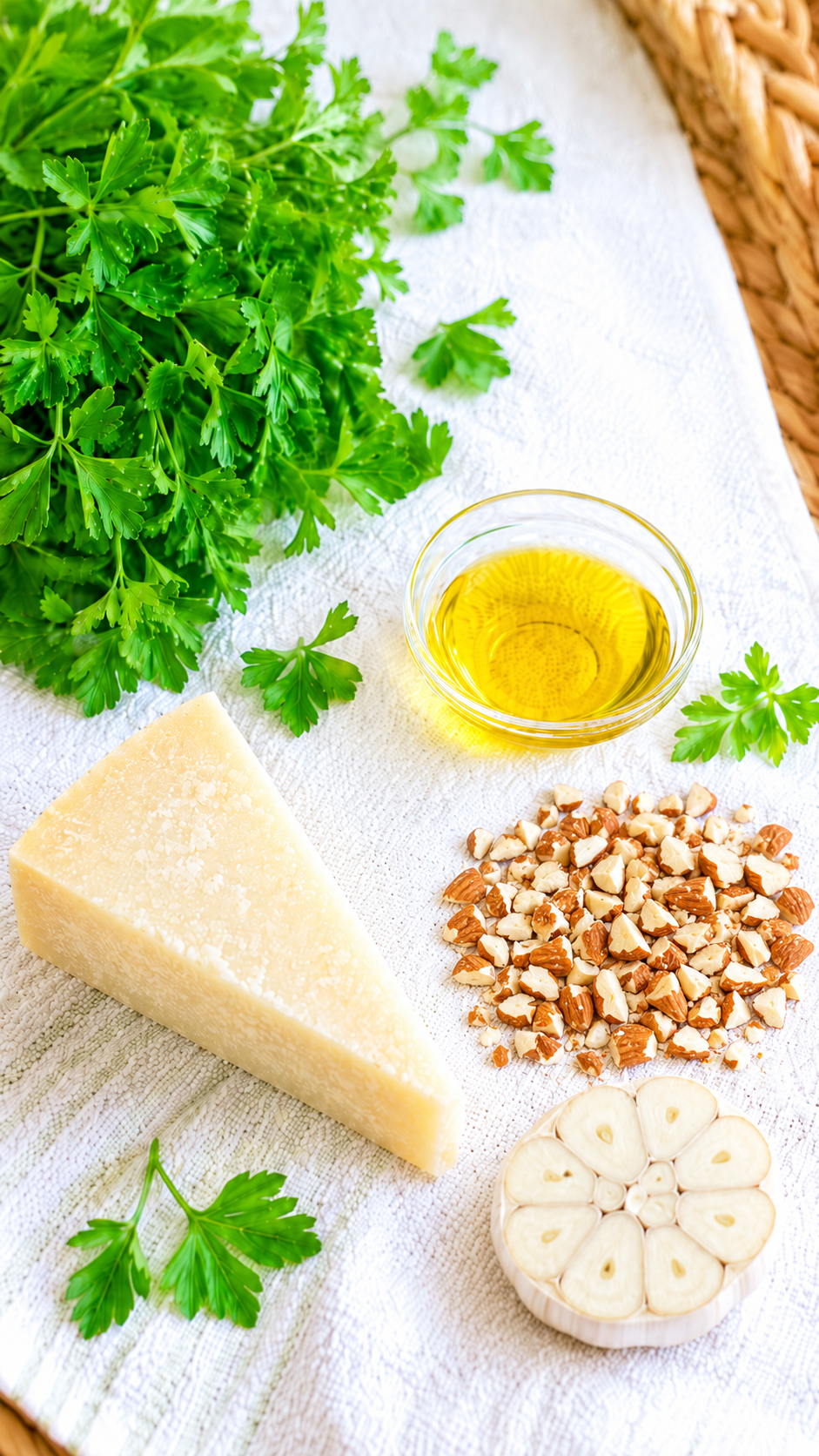
Parsley
Fresh parsley is the base of this pesto. Use mostly leaves and tender stems. Avoid the thick, woody stems because they can make the pesto taste bitter or stringy.
Almonds
Almonds replace the pine nuts in this recipe. They are more affordable and still give the pesto a nutty, rich flavor.
Garlic
Use 3 to 5 cloves of garlic depending on how garlicky you like your pesto. Start with 3 if you want it milder.
Olive Oil
Olive oil brings everything together and gives the pesto a rich, spreadable texture.
Parmesan Cheese
Parmesan adds saltiness, depth, and savory flavor.
Salt
Add salt to taste at the end. Parmesan is already salty, so taste before adding too much.
How to Make Parsley Pesto with Almonds
Start by adding the almonds to a food processor. Pulse them a few times to break them down into smaller pieces. This helps create a better texture, especially if you are using whole almonds.
Add the parsley and garlic. Pulse again until the parsley starts to break down and everything looks coarse and combined.
Add the Parmesan cheese, olive oil, and a small pinch of salt. Process until the pesto reaches your preferred consistency.
For sandwiches, I like the pesto a little thicker and more textured. For pasta, add more olive oil one tablespoon at a time until it becomes looser and easier to toss.
Taste and adjust. Add more salt if needed, more olive oil if it feels too thick, or another clove of garlic if you want a stronger garlic flavor.
Pro Tips for the Best Parsley Pesto
For a smoother pesto, use blanched almonds or soak your almonds in hot water for about 10 minutes before blending.
For a deeper nutty flavor, toast the almonds lightly before adding them to the food processor.
Use mostly parsley leaves and tender stems. The thick stems can make the pesto taste bitter.
Do not add too much salt at the beginning. Parmesan is salty, so season at the end.
If the pesto tastes too sharp, add a little more olive oil or Parmesan to balance it.
If the pesto is too thick, add more olive oil one tablespoon at a time.
Ways to Use Parsley Pesto
Parsley pesto with almonds is one of those sauces that can go in so many directions. It works as a spread, sauce, dip, or topping.
Try it with:
- Pesto halloumi sandwiches
- Pasta
- Garlic toast
- Fried or scrambled eggs
- Grilled chicken
- Fish
- Roasted vegetables
- Grain bowls
- Wraps
- Paninis
- Flatbreads
- Roasted potatoes
My favorite way to use it is in crispy halloumi sandwiches. The salty halloumi, toasted bread, and fresh parsley pesto are such a good combination.
Can You Make Parsley Pesto Ahead of Time?
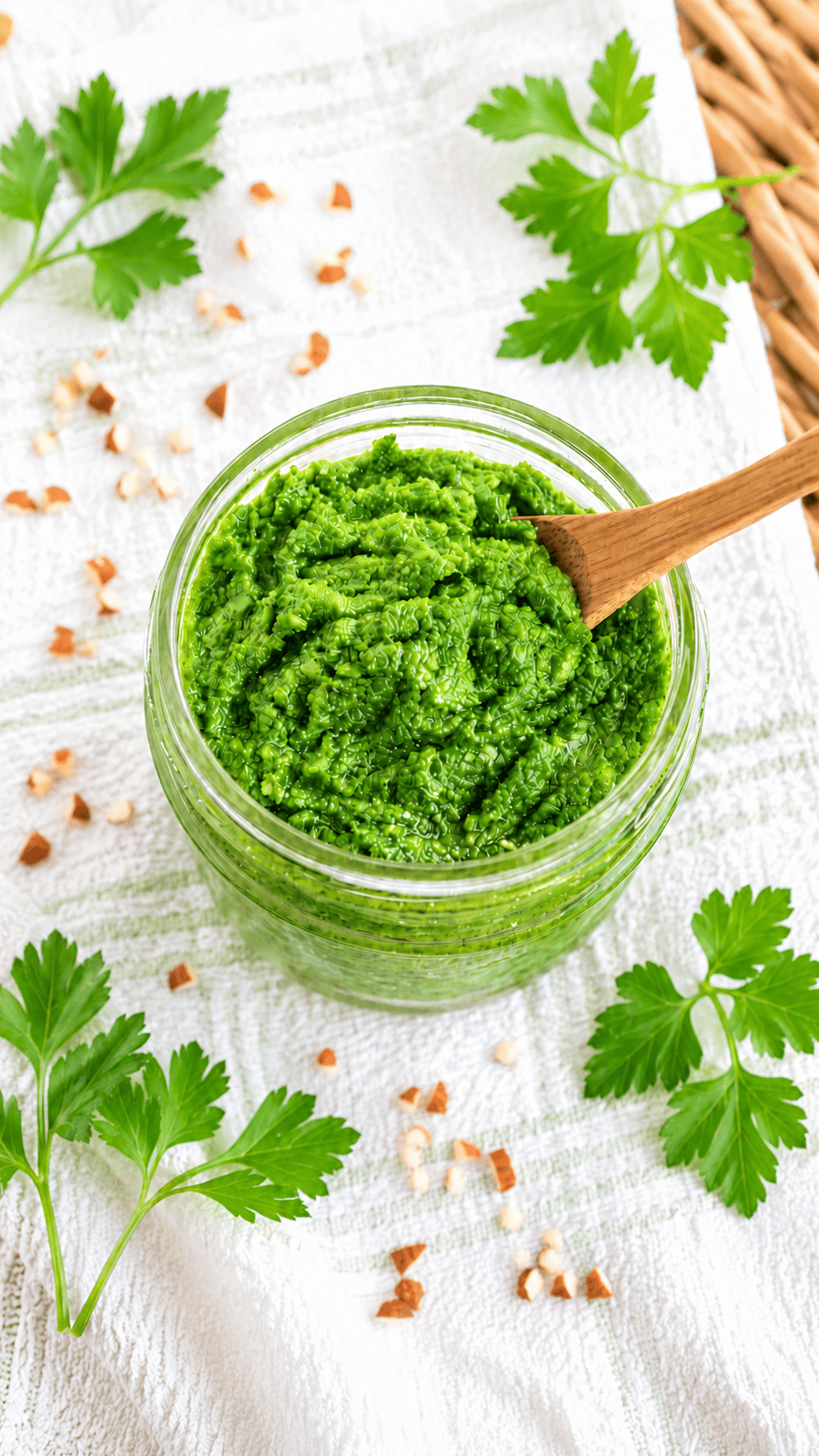
Yes. Parsley pesto is a great make-ahead sauce. Store it in a glass jar or airtight container in the refrigerator.
To help keep the pesto fresh, add a thin layer of olive oil on top before sealing the container. If the pesto thickens in the fridge, stir in a little more olive oil before using.
How to Store Parsley Pesto
Store parsley pesto in an airtight container in the refrigerator for up to 5 days.
You can also freeze parsley pesto in small portions. Spoon it into an ice cube tray, freeze until solid, then transfer the cubes to a freezer-safe bag or container. This makes it easy to pull out just what you need for pasta, sandwiches, or quick meals.
Frequently Asked Questions
Can I make pesto with parsley instead of basil?
Yes. Parsley works really well in pesto. It has a fresh, herby flavor and is often easier to find in large bunches than basil.
Can I use almonds instead of pine nuts in pesto?
Yes. Almonds are a great substitute for pine nuts in pesto. They are more affordable and add a mild, nutty flavor.
What kind of almonds should I use for parsley pesto?
You can use raw almonds, toasted almonds, or blanched almonds. Blanched almonds will give you a smoother pesto, while regular almonds give the pesto a more rustic texture.
Does parsley pesto taste like basil pesto?
Parsley pesto has a similar garlicky, nutty, cheesy flavor, but it tastes a little brighter and earthier than basil pesto.
Why is my parsley pesto bitter?
Parsley pesto can taste bitter if you use too many tough stems or over-process the herbs. Use mostly leaves and tender stems, and balance the flavor with Parmesan, olive oil, and salt.
Can I freeze parsley pesto?
Yes. Freeze parsley pesto in small portions or in an ice cube tray. Once frozen, transfer the cubes to a freezer-safe bag or container.
Is parsley pesto good for sandwiches?
Yes. Parsley pesto is excellent for sandwiches because it is thick, flavorful, and easy to spread. It works especially well with halloumi, mozzarella, grilled chicken, roasted vegetables, or eggs.
You May Also Like
- Try these Pesto Halloumi Sandwiches for an easy vegetarian lunch with crispy halloumi and homemade parsley pesto.
- Check out my Herby Pearl Couscous Salad for another fresh parsley-packed recipe.
- Try this Arabic Potato Salad if you love bright, herby side dishes.

Parsley Pesto with Almonds
Ingredients
- 3 cups fresh parsley packed
- 1/2 cup almonds
- 3 to 5 cloves garlic
- 1/2 cup Parmesan cheese
- 1/4 cup olive oil plus more as needed
- Salt to taste
Instructions
- Add the almonds to a food processor and pulse a few times to break them down into smaller pieces.
- Add the parsley and garlic to the food processor.
- Pulse until the parsley, almonds, and garlic start to break down into a coarse mixture.
- Add the Parmesan cheese, olive oil, and a small pinch of salt.
- Process until the pesto reaches your preferred texture. For a thicker sandwich spread, keep it slightly chunky. For a looser pasta sauce, add more olive oil one tablespoon at a time.
- Taste and adjust the seasoning. Add more salt, garlic, Parmesan, or olive oil as needed.
- Transfer the parsley pesto to a glass jar or airtight container.
- Serve with pasta, spread onto toast, spoon over vegetables, or use in sandwiches.
Notes
